



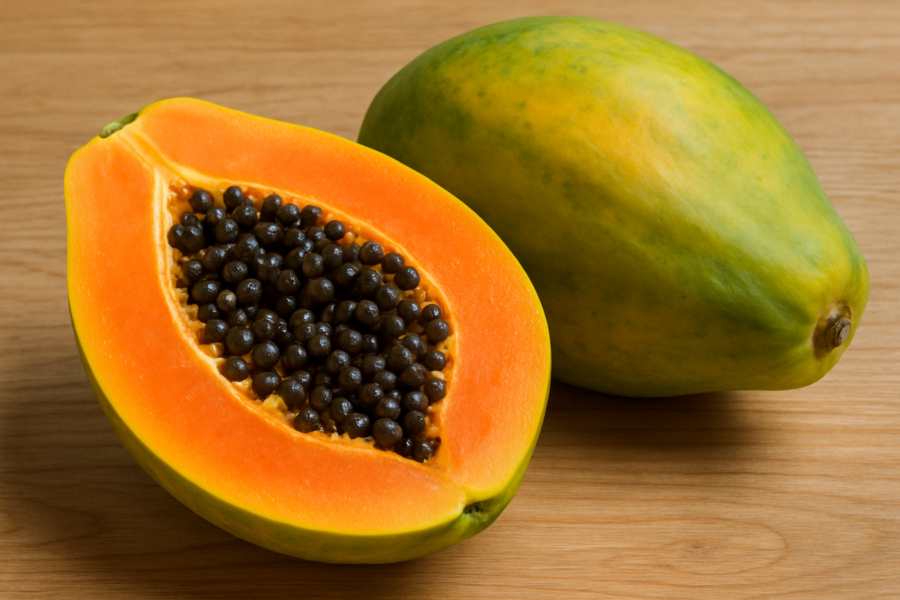
An international team of researchers from the CSIR-CDRI (Department of Pharmaceutics and Pharmacokinetics of the Central Drug Research Institute of the Council of Scientific and Industrial Research), India, and South Ural State University investigated the mechanisms by which flavonoids found in papaya (Carica papaya L.) influence platelet levels in the blood of patients with dengue fever. SUSU was represented by Irina Potoroko, Director of the School of Medical Biology and Doctor of Sciences (Engineering), and Varisha Anjum, Senior Research Fellow at the School of Medical Biology. The results have been published in the South African Journal of Botany (https://doi.org/10.1016/j.sajb.2025.04.020).
Dengue fever is a disease common in many countries of the Global South, from India to South Africa. Nowadays, thanks to globalization and the growth of the air travel market, cases of tropical fevers are occasionally diagnosed in Europe and Russia.
Dengue fever is transmitted by blood-sucking insects and bats, and can also be transmitted from person to person. Dengue fever is classified as a hemorrhagic fever, characterized by internal bleeding, making it particularly dangerous. The hemorrhages are caused by thrombocytopenia, a low platelet count that causes the blood to become too thin. If left untreated, the patient may go into shock and die.
Papaya juice has long been known in medicine in the Global South for its antimicrobial and wound-healing properties. It was known that this juice increases platelet counts, but the mechanism was unclear.
Researchers isolated polyphenols in papaya juice: the bioactive butanol fraction (BBF) and the bioactive ethanol fraction (BEF). They concluded that these substances stimulate platelet growth and hematopoiesis (production of red blood cells, platelets, and other blood cells), saving lives.
Furthermore, they demonstrated the high effectiveness of BBF in killing HepG2 cells, which are associated with liver cancer in humans; the dengue fever virus readily penetrates these cells.
Other phytocompounds from papaya juice, such as quercetin, transferulic acid, and kaempferol, have also been shown to reduce thrombocytopenia, and kaempferol may also have potent anti-inflammatory effects by reducing nitric oxide levels in blood.
As a result, researchers have proposed a comprehensive therapeutic approach to increasing platelet levels in dengue fever through immunomodulation, antioxidant activity, and the antithrombotic effect of papaya juice components.
It should be noted that the World Health Organization (WHO) has recently declared a potential future pandemic threat for Chikungunya fever, which has spread from its traditional tropical regions to 119 countries, including Europe. Like dengue fever, this disease is characterized by platelet deficiency, resulting in extensive hemorrhaging. It is also transmitted by mosquitoes, although the virus itself has a different form.
It is also worth emphasizing that the journey from research data obtained by scientists to the introduction of specific drugs into medical practice is a long one, spanning decades. Meanwhile, papaya juice has already been used to treat dengue fever in medical practice in countries of the Global South, and this new research will help improve the quality of papaya-based medications.