


يوليو 2025

В ЮУрГУ обсудили будущее искусственного интеллекта в регионе

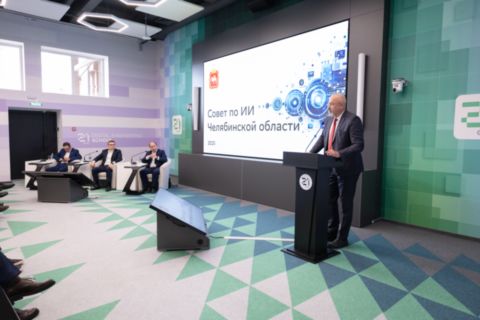
В Школе 21 Южно-Уральского государственного университета состоялось первое заседание Совета по искусственному интеллекту Челябинской области под председательством губернатора Алексея Текслера. Мероприятие собрало экспертов в сфере цифровых технологий, представителей науки, образования и бизнеса.

По словам главы региона, Челябинская область уделяет особое внимание развитию искусственного интеллекта, активно реализуя указ Президента Российской Федерации и положения федерального проекта «Искусственный интеллект».
Поступайте туда, где будущее создается прямо сейчас!

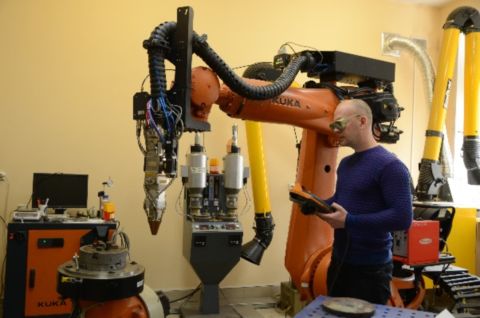
Более 10 лет Южно-Уральский государственный университет является одним из ведущих научно-учебных центров в области подготовки специалистов по направлению «Аддитивные технологии» (15.04.01 Машиностроение: Аддитивные технологии).

Что такое аддитивные технологии? Это инновационные методы изготовления изделий путем послойного наложения материала (3-d принтинг, создание многофункциональных покрытий и др.) — будущего промышленности!

Мы готовим специалистов, способных разрабатывать уникальные решения и внедрять передовые производственные процессы.

13.03.02 Power Engineering and Electrical Engineering

Major: Power Supply Systems of Industrial Enterprises and Cities Level: Bachelor’s degree programme Duration of training: 4 years Mode of study: Full-time / onsite Language of study: Russian Description of the educational programme This programme provides knowledge that to that maximum extent meet the requirements set for specialists working at electric power supply facilities at any production complex or in cities. In the process of training, various computer programmes are widely used (for computeraided calculation, computer-aided designing, 3D modelling, etc.). Our students successfully master this software during their training. They learn how to calculate various modes of operation of electric power supply systems; select electrical equipment; calculate the characteristics of protection devices and adjust the relay protection; evaluate the electrical power quality; assess the reliability of electric power supply systems; and calculate artificial lighting systems. Main programme-specific classes: Power Converter Equipment Transient Processes in Electric Power Supply Systems Electrical Engineering and Process Industrial Units Electrical Power Quality in Electric Power Supply Systems Surge Voltage in Electric Power Supply Systems Relay Protection and Automation in Electric Power Supply Systems Digital Modelling of Electrical Power Grids Operation of Electrical Equipment of Electric Power Supply Systems APPLY NOW

13.03.02 Power Engineering and Electrical Engineering

Major: Electric Power Systems with Integrated Relay Protection and Automation Level: Bachelor’s degree programme Duration of training: 4 years Mode of study: Full-time / onsite Language of study: Russian Description of the educational programme Holders of a Bachelor's degree in Electric Power Systems with Integrated Relay Protection and Automation is in command of the knowledge of the processes of transmission, conversion and distribution of electricity, normal and emergency modes of operation of the main power electrical equipment of electric power plants and substations, design and principles of operation of microprocessor-based relay protection and automation devices, as well as the structure and functions of a computer-aided control system for technological processes in high-voltage electric power substations. Graduates of this Bachelor's degree programme can work at power plants, high-voltage electric power substations, and electrical power systems and networks. In the process of training, students obtain the skills and experience of calculating and analysing the modes of electrical power systems and grids, designing electric power substations, calculating and selecting the main power and switching equipment, as well as programming and adjusting microprocessor-based relay protection and automation devices. To complete the training, students develop and defend their diploma projects, in which they design a high-voltage step-down substation for the purpose of connecting a new consumer to a power supply network. Main programme-specific classes: Transient Processes Electric Power Plants and Substations Electric Equipment of High-voltage Substations Fundamentals of Designing Electric Power Plants and Substations Coordination of Electric Equipment Insulation Electrical Power Systems and Grids Operation of Electrical Power Grids Transmission and Distribution of Electricity Reliability of Electrical Power Systems Engineering and Designing of Electrical Power Systems Elements of Microprocessor-based Systems Theory of Relay Protection and Automation Integrated Relay Protection and Automation of Electrical Power Systems Software Tools in Power Engineering Automation of Electrical Power Systems Fundamentals of Programming Logic for Relay Protection and Automation Fundamentals of Designing Relay Protection of Digital Substations Mathematical Problems of Power Engineering High-voltage Engineering Methods of Optimization and Decision Making Power Electronics Power Engineering Systems with Elements of Power Electronics APPLY NOW

Bachelor's Degree Programmes

13.03.01 Thermal Power Engineering and Heat Engineering (Industrial Thermal Power Engineering) 13.03.02 Power Engineering and Electrical Engineering (Electric Power Systems with Integrated Relay Protection and Automation) 13.03.02 Power Engineering and Electrical Engineering (Power Supply Systems of Industrial Enterprises and Cities) 13.03.02 Power Engineering and Electrical Engineering (Electric Drive and Automation of Industrial Plants and Technological Complexes) 15.03.02 Technological Machines and Equipment (Hydraulic Machines, Hydrodrives and Hydraulic and Pneumatic Control Systems) 15.03.04 Automation of Technological Processes and Production (Systems of automated management of technological processes in industry and city infrastructure) 15.03.05 Design and Technological Support of Mechanical Engineering Productions (Automated mechanical engineering technology) 22.03.02 Metallurgy (System Engineering in Metallurgical Technologies)      

11.04.04 Electronics and Nanoelectronics

Major: Nanoelectronics: Quantum Technologies and Materials Level: Master’s degree programme Duration of training: 2 years Mode of study: Full-time / onsite Language of study: Russian Description of the educational programme Nanotechnologies are the core of a new technological system and the material base for the development of digital technologies and artificial intelligence. The transition to the nanolevel in electronics means that ideas about the structure and principles of operation of electronic systems, based on the principles of classical physics, must be supplemented or replaced by the laws of quantum mechanics. In this academic programme, such transition is ensured by the fact that, along with modern courses on micro- and nanoelectronics, much attention is paid to electronic devices as quantum objects, their description by analytical and numerical methods, the use of achievements in condensed matter physics, quantum informatics and physics of nanoscale systems. Mastering this programme will create the basis for the demand for its graduates over the next decades. Main programme-specific classes: Materials for Functional Electronics Solid-state Smart Sensors Digital Electronics Components Microprocessor-based Systems Quantum Static Methods of Nanoelectronics Non-conventional Materials for Solid-state Electronics Atomistic Modelling of Nanoelectronics Materials Quasi-classical Models of Electronic Devices Nanoelectronics in Biology and Medicine Quantum Information and Quantum Computing Radiation Technologies in Electronics Methods of Quantum Materials Science Low-dimensional Structure Electronics Physics of Nanoscale Systems Relevant Problems of Modern Electronics and Nanoelectronics Mathematical Modelling of Devices and Systems CAD in Electronics Introduction to Quantum Computing APPLY NOW 

05.04.06 Ecology and Use of Natural Resources

Major: Environmental Safety Level: Master’s degree programme Duration of training: 2 years Mode of study: Full-time / onsite Language of study: Russian Description of the educational programme Each undergraduate performs work in the direction associated with their subsequent professional occupation. Participation in international programs: with the Lappeenranta University of Technology (Finland, double degree), Radboud University in Nijmegen (Netherlands, training included), University of Shanghai Cooperation Organization (joint university of SCO countries, training included); Work in scientific groups with developed international contacts, full time participation in foreign scientific conferences, participation in international and national scientific projects, the possibility of training at leading international laboratories. Professional competencies of the graduates: Biological and chemical objects and their impact on the environment; Methods and instruments for monitoring pollution of gas, solid and liquid components of production and the environment; Waste disposal and recycling systems. Methods and means of protecting the environment from human impact. Areas of scientific interests: theory of catalytic and sorption processes; development of new types of nanostructured inorganic functional materials for industrial chemical reactions, purification of natural and industrial wastewater, extraction of valuable components; development of technologies for purification of natural and industrial wastewater, industrial waste gases, disposal of solid waste; environmental management and environmental auditing in the interests of sustainable economic development. APPLY NOW

03.04.01 Applied Mathematics and Physics

Major: Physical and Chemical Mechanics of Continuous Media Level: Master's degree programme Duration of training: 2 years and 6 months Mode of study: Full-time / onsite Language of study: Russian Description of the educational programme Graduates of the programme are specialists in the field of mathematical models of mechanics of multi-component environments, fast-moving physical-chemical processes; development of new algorithms and computer programs for scientific research and applied purposes. The program is implemented together with VNIITF ROSATOM and the students carry on scientific activity under the supervision of leading scientists of VNIITF ROSATOM. APPLY NOW

03.04.01 Applied Mathematics and Physics

Major: Fiber and Laser Optics Level: Master's degree programme Duration of training: 2 years and 6 months Mode of study: Full-time / onsite Language of study: Russian Description of the educational programme Graduates of the programme are highly qualified scientists and technical workers capable to solve actual problems of modern society based on Physics, Mathematics, Computer Technology and Theoretical Physics. Students are engaged in research activity within the framework of the Government Institute of Electrophysics of the Ural Branch of the Russian Academy of Sciences. The lectures are given in Russian, but English is necessary for successful graduation. Students get skills to work with full-text facilities research publications, analytical work, presentation of research results through publications and conferences. APPLY NOW
You are reporting a typo in the following text:
Simply click the "Send typo report" button to complete the report. You can also include a comment.